
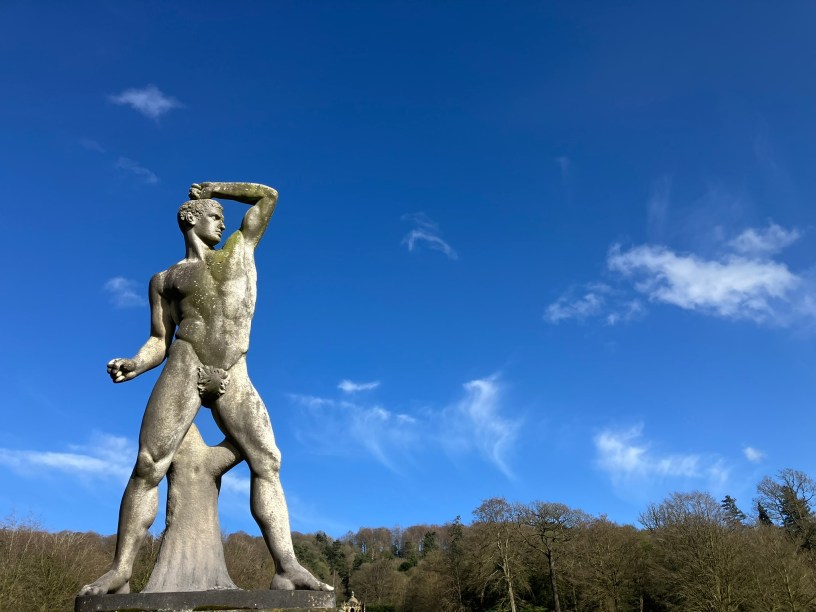
Chatsworth, in Derbyshire, does exist as a ‘parish’, although most of it is owned by the Duke of Devonshire. Dominating the area is the Devonshires’ ancestral home, Chatsworth House, beloved backdrop for many a period drama on the telly. It’s seen more bodice-ripping than Whitechapel.
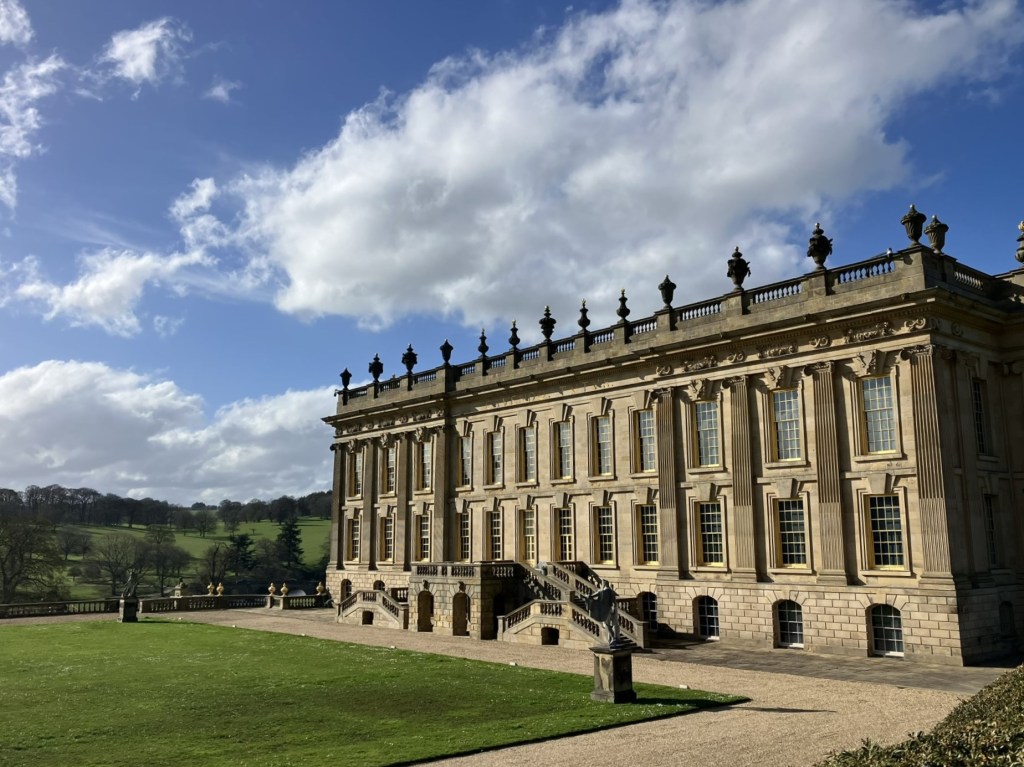
The family name of the Devonshire peerage is Cavendish and they have been lording it around the North of England for centuries. Quite why they took the title of ‘Devonshire’ is unknown. Devon is about as far as you can get from Derbyshire, probably a seven-day ride back in the day, longer if you were riding something other than a horse…a goat or pig maybe.
One theory is that when the Cavendishs turned up they didn’t want to upset the existing neighbours, the Earls of Derby. That landed family had been around since William the Conqueror, and you don’t get to hang on to estates and titles for that long without carrying a very big stick.
There’s more than one way to outdo the neighbouring aristocracy though and, once they’d settled in, they managed to build themselves one of the grandest houses in England. I doubt the Earls of Derby were living on a council estate, but they can’t have been too chuffed when the Devonshires had the temerity to build state apartments at Chatsworth.
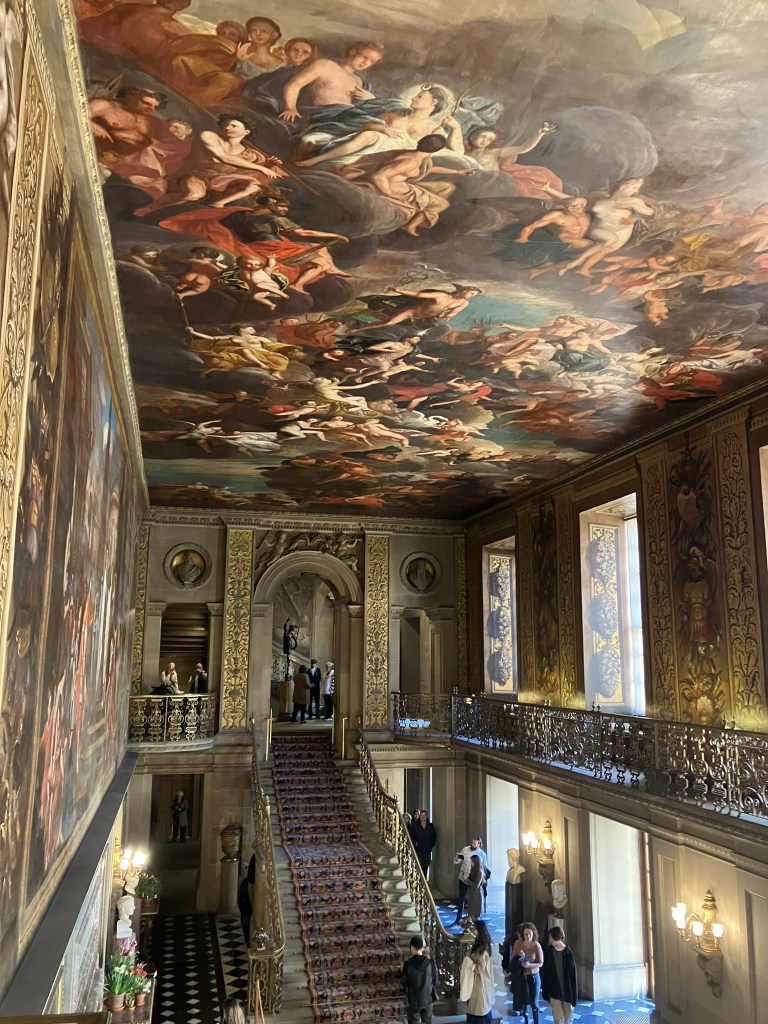
State apartments were only ever used in the event of a visit by a reigning monarch, so having them on the off-chance that a King or Queen popped in was the ultimate in showing-off.
As it happened, they weren’t used for two-hundred years, not until George V stopped by in 1913. I think his new-fangled horseless carriage had run out of petrol, or his old-fangled carriage had run out of horses, one or the other.
The house had really taken off in the 18th Century when the Fourth Duke of Devonshire employed Capability Brown to landscape the estate and its gardens. Lancelot Brown earned the nickname ‘Capability’ not because he was capable, indeed his later detractors thought not, but because he would tell his clients their grounds were ‘capable of improvement’.
Capability Brown’s approach was to sculpt the landscape. He moved houses, uprooted trees and even redirected rivers, to make an eye-pleasing, but totally artificial, vista to look out upon from your balcony whilst you breakfasted on quails’ eggs, larks’ tongues and unicorn kidneys.
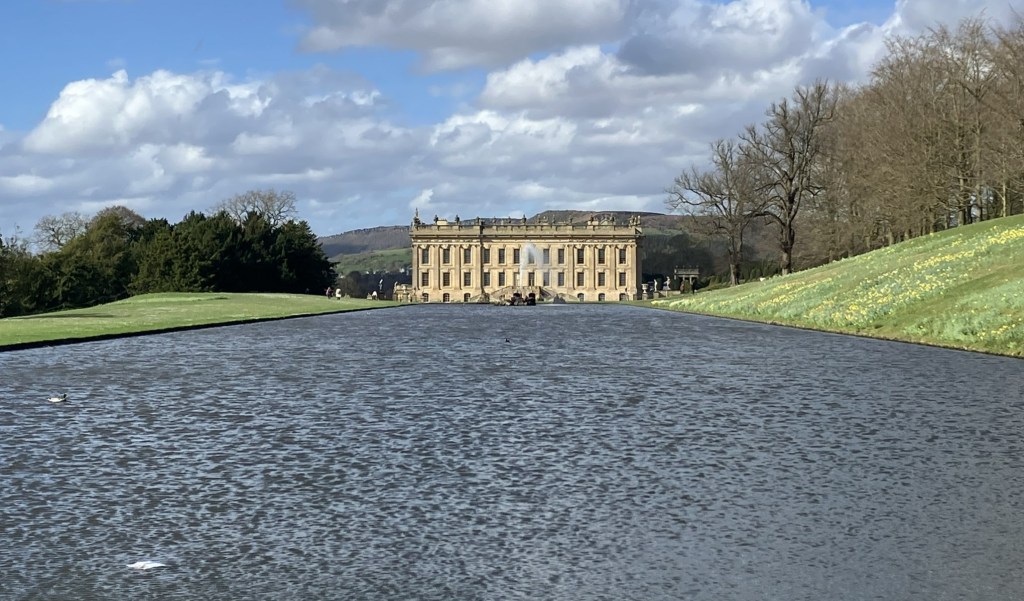
The lack of ‘real’ nature in his landscapes was what later critics decried him for. However, the gardens make for a nice day out, and at £20 for a visit I suppose the current Duke of Devonshire offers a prayer of thanks to Capability every evening when he counts the till receipts.
However, nature finds a way. I saw a Mandarin Duck messing up the symmetry of Capability Brown’s very formal rectangular lake, a feature that makes the house look like it floats on water. I say, ‘nature finds a way’ but that’s a bit fanciful when it comes to the Mandarin Duck. They were imported from China and any resident ducks here are descended from escapees from private collections.

I recently spent some time looking, unsuccessfully, for garish Hoopoes in Menorca. Seeing an equally outlandish bird in Derbyshire, more like a duck in drag, was some recompense. Apparently, the Mandarin Duck nests in holes high up in trees, quite unlike any other duck. I can’t help but think that is not without its risks, indeed I was moved to write a poem about such foolhardy behaviour…so I’ll finish on it…
There was a bizarre duck from China
For plumage, you’d see nothing finer
Her eggs fell out of a tree
She quacked, “Woe is me”
“Perhaps they’re safer in my vagina*”.
* I have no idea if lady-ducks have vaginas, or indeed that’s where they could keep eggs. I’ve never been quite sure about all that business with women either, it all happens down there somewhere. Best not to ask.
To see more of Johnny’s ill-informed travel guides click here.
Duck picture by Monica Abner from Pixabay
 JOHNNY SPANGLES - THE TIGHTFIST TRAVELLER